SHARE TO:
“Hormone health” has become one of those phrases that seem to be everywhere. Hormone-balancing meal plans, hormone detoxes, supplements for your hormones, foods you should eat during each phase of your cycle, and foods you should apparently never eat because they’re going to “mess up your hormones.” It can get really overwhelming, especially when you’re just trying to figure out what you should actually be doing to feel your best.
I hear this from my clients all the time. They’ll be making progress in their nutrition, eating more consistently, adding more fiber, getting more protein, working on their sleep, and paying more attention to how they build their meals, and then they’ll ask me, “But what else should I be doing for my hormones?”
And my answer is usually: You’re already doing it.
Because hormone-supportive nutrition isn’t necessarily some completely separate thing you need to add on top of everything else you’re already working on. In fact, many of the habits we talk about every day are exactly the things that support healthy hormone function.
Your hormones are not something you need to “balance” perfectly. Hormones naturally fluctuate throughout your life and even throughout the day. Your menstrual cycle, stress, sleep, age, activity, medications, and many other factors can all influence them.
Instead of thinking about how to keep your hormones at some perfect, unchanging level, I like to think about supporting the systems that influence hormone health. And that starts with many of the same basic nutrition and lifestyle habits I’ve been talking about all along.
This one gets overlooked constantly when we talk about hormone health. We can’t talk about supporting your hormones while simultaneously encouraging you to drastically restrict calories, skip meals, or constantly push through hunger.
Your body needs enough energy and nutrients to function well. When you’re consistently under-fueling, your body has to make decisions about where that limited energy goes, and that can have consequences for many different systems in the body.
Eating enough doesn’t mean eating perfectly or eating more than you need. It means giving your body consistent access to the energy and nutrients it needs instead of constantly putting it in a state of restriction.
Protein isn’t just about building muscle. It’s also an important part of creating satisfying meals, supporting muscle as we age, and helping you stay fuller between meals.
Rather than obsessing over hitting a perfect protein number every single day, I want you to start thinking about including a source of protein regularly throughout the day. Eggs at breakfast, Greek yogurt for a snack, chicken, turkey, fish, tofu, beans, or another protein source at lunch or dinner. It doesn’t have to be complicated.
This is one of those things I work on all the time with my clients, and you may not realize how much of a difference it can make. When you add more non-starchy vegetables, fruits, whole grains, beans, lentils, nuts, and seeds to your diet, you’re not just “eating healthier.” You’re increasing your fiber intake, which supports digestive health and can help with blood sugar management, cholesterol, and overall metabolic health.
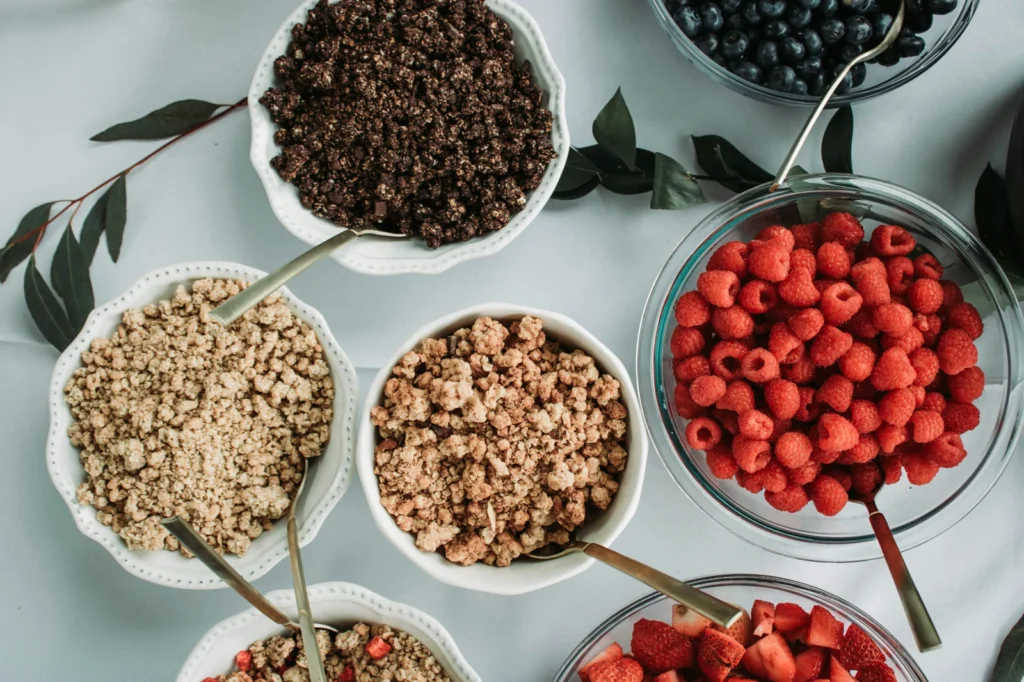
So when I encourage you to add berries to your breakfast or vegetables to your lunch, that’s hormone-smart nutrition. When I encourage you to choose whole grains more often or add beans to a meal, that’s hormone-smart nutrition, too. You don’t need to find some exotic “hormone-balancing” food when many of the foods you’re already eating are doing exactly what you need them to do.
This is another big one, and I want to be really clear that balancing blood sugar does not mean eliminating carbohydrates. Please don’t let social media convince you that carbs are the enemy of your hormones.
Instead, we’re looking at how you build your meals. Pairing carbohydrates with protein, fiber, and healthy fats can help make meals more satisfying and support a steadier blood sugar response. Think oatmeal with Greek yogurt and berries, toast with eggs and avocado, or rice with chicken and vegetables.
It’s not about avoiding carbohydrates. It’s about giving your carbohydrates some friends (like nuts/seeds, cheese, and proteins).
I know. You were probably hoping I was going to tell you about a magical hormone-balancing food instead. Unfortunately, your body is not that easily fooled.
Sleep matters. A lot. When you’re consistently sleep-deprived, it can affect appetite regulation, blood sugar control, stress hormones, energy levels, and even your ability to make decisions around food.
And let’s be honest: when you’re exhausted, the last thing you want to do is spend an hour preparing a perfectly balanced meal. Sometimes supporting your hormones looks a lot less exciting than buying a new supplement. Sometimes it looks like going to bed.
Stress is another piece of the hormone-health conversation that deserves attention. And no, I’m not suggesting you need to eliminate stress from your life because that’s obviously not realistic. Life is stressful. Work is stressful. Parenting is stressful. Relationships are stressful. Sometimes your schedule is just a complete mess.
What we can do is look for small ways to give your body a break. Maybe that’s a 10-minute walk, sitting outside with your coffee, taking a few deep breaths before you walk into the house after work, calling a friend, putting your phone down, or doing something that genuinely makes you laugh.
Your nervous system doesn’t need another complicated item on your to-do list. It needs some opportunities to come down a notch.
Exercise can support so many aspects of health, including metabolic health, muscle mass, insulin sensitivity, bone health, mood, and stress management. But once again, more isn’t always better.
You don’t need to exercise for two hours a day to support your health. Walking counts. Strength training counts. Bike rides count. Taking the stairs counts. Dancing around your kitchen counts.
The best exercise is often the kind you actually enjoy and can continue doing consistently. I would much rather see you move your body in a way that fits into your life than force yourself through workouts you hate because you think you need to “burn off” what you ate.
Probably not. This is where I wish I could save you some money. You don’t need a special hormone diet. You don’t automatically need to eliminate dairy, gluten, sugar, or carbohydrates because someone on Instagram told you they’re “disrupting your hormones.” You don’t need a cabinet full of expensive supplements, and you don’t need to completely change the way you eat every week based on where you are in your menstrual cycle.
There are certainly situations where hormones need medical evaluation or where nutrition needs to be adjusted for a specific condition. That’s where your healthcare team comes in. But for most people, supporting hormone health isn’t about finding the one magical food or supplement. It’s about supporting your body consistently.
Eating enough. Eating regularly. Getting enough protein and fiber. Including carbohydrates. Eating a variety of nutrient-dense foods. Supporting blood sugar regulation. Getting enough sleep. Managing stress as best you can. Moving your body.
And doing these things consistently, not perfectly.
This is the part I really want you to take away. If you’ve been working on your nutrition and thinking, “But what am I actually doing for my hormones?” take a step back and look at what you’ve already changed.
Maybe you’re eating breakfast more consistently or you’re finally getting vegetables into your lunch. Maybe you’ve increased your fiber or you’re eating protein at each meal.
Those things aren’t separate from hormone health. They’re part of it.
You don’t need to chase every new hormone-health trend that pops up on your social media feed. Sometimes the most “hormone-smart” thing you can do is continue doing the boring, foundational things that actually support your health.
And honestly? Boring is underrated.
Because when it comes to your health, the things that work aren’t always the things that make the best Instagram Reel. They’re usually the things you can keep doing on an ordinary Tuesday when life is busy, you’re tired, and nobody is handing you a perfectly prepared hormone-balancing smoothie. That’s where real progress happens.
In your corner,